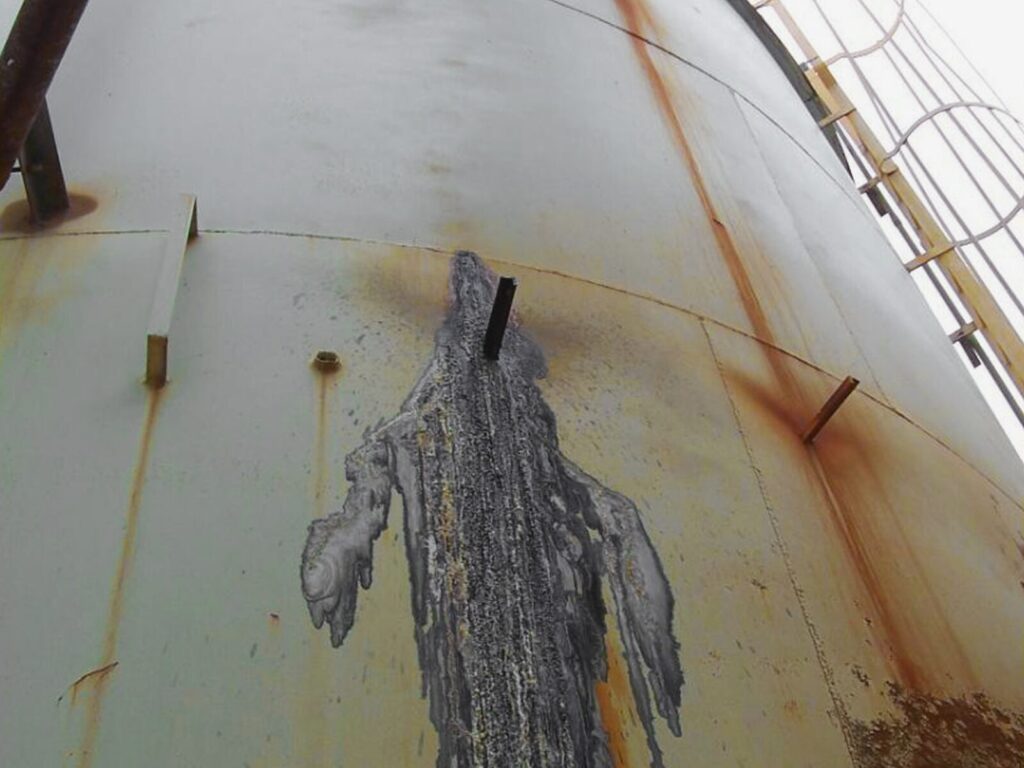
The Applied Technical Services Family of Services (FoC) investigates catastrophic tank failures on-site by assessing whether tanks with corrosion, cracking, settlement, fatigue, or other defects can continue to operate safely before they pose serious safety or environmental risks.
How We Investigate Catastrophic Tank Failure
At ATS, our multidisciplinary team of experts assesses failure scenes to pinpoint damage, identify root causes, and offer clear corrective actions. While methods vary with tank design, service conditions, and suspected damage mechanisms, we follow a comprehensive testing framework to assess the risk of catastrophic tank failure.
- We examine and document the damage, collect evidence, photograph failed components, and gather data on operating conditions and maintenance history. Our team reviews NDT results and performs engineering analysis to ensure a thorough investigation.
- Our asset integrity engineers lead comprehensive site investigations, documenting damage, collecting evidence, surveying the scene, and reviewing operating conditions.
- We review inspection records, maintenance history, and NDT results to identify contributing factors and previous integrity concerns. Our engineers assess the severity of damage to confirm whether the tank can safely operate under current loads and conditions.
- Our technicians use non-destructive testing methods, including ultrasonic testing and weld inspections, to evaluate defects and ensure structural integrity.
- Our metallurgical and laboratory, including metallography, chemical analysis, and mechanical testing, determine the failure mechanism and root cause.
- Based on our findings, we may recommend continued operation, repairs, reduced operating limits, increased monitoring, or asset retirement.
What Standards Are Used to Assess Catastrophic Tank Failure?
The most common standards we apply to catastrophic tank failure assessments include, but are not limited to:
- API 653: Tank inspection, repair, and integrity assessment
- API 579 / ASME FFS-1: Fitness-for-Service evaluations
- API 650: Storage tank design and construction
- API 580 & 581: Risk-Based Inspection (RBI)
- ASME BPVC: Pressure vessel integrity and design
- ASTM Standards: Metallurgical and materials testing and laboratory analysis
- NDT Standards: Ultrasonic, radiographic, penetrant, infrared thermography, liquid penetrant testing, and magnetic particle testing
Prevent Failure Before It Occurs
Addressing defects early with fitness-for-service assessments can reduce the risk of leaks, ruptures, environmental releases, and catastrophic tank failures. Our goal is to prevent catastrophic tank failures by turning inspection data into actionable decisions. Early intervention reduces the risk of leaks, ruptures, environmental releases, and costly repairs or replacements.
Founded locally in 1967, ATS has built a reputation as a trusted testing provider committed to safety and reliability. Our state-of-the-art labs hold ISO/IEC 17025:2017 (A2LA) accreditations for a variety of mechanical testing methods in accordance with our ISO 9001:2015-registered quality management system.
Contact Us
Partner with ATS to keep your tanks safe and fit for service. To learn more about our catastrophic tank failure investigations, submit a web request or call us at +1 (888)-287-5227.