The Applied Technical Services Family of Companies (ATS FoC) provides axial tensile testing to evaluate the performance of materials and components under controlled tensile loading. This method applies force along the specimen’s longitudinal axis until deformation or failure occurs. Axial tensile testing enables engineers to assess mechanical properties, verify material specifications, support quality control, and determine suitability for demanding applications. Our programs accommodate various specimen configurations and material types, delivering accurate data to inform engineering and product development decisions.
What Materials Can Undergo Axial Tensile Testing?
Axial tensile testing is suitable for a wide range of metallic and nonmetallic materials. Our laboratory evaluates various materials including:
- Carbon and alloy steels
- Stainless steels and specialty alloys
- Aluminum and other nonferrous metals
- Plastics and polymeric materials
Testing also supports evaluation of manufactured components, raw materials, and specimens from production parts. Technicians use axial tensile testing to compare material performance with relevant specifications, drawings, purchase requirements, or project criteria.
About Our Axial Tensile Testing
We conduct axial tensile testing by combining controlled conditions, calibrated equipment, and experienced personnel to deliver reliable mechanical property data. We tailor testing programs to meet specific project requirements and industry standards. Our quality systems ensure consistent practices and traceable results. Depending on your needs, our services support:
- Material qualification and verification
- Manufacturing quality control
- Research and development
- Failure investigation and engineering analysis
Our axial tensile testing services can address requirements within standards such as:
- ASTM B557
- ASTM E8
- ASTM F606/F606M
- ISO 6892- 1
- ISO 898- 1
- ISO 898- 2
- SAE J429
- SAE J995
- SAE J1199
Our team assists clients in selecting specimen configurations, testing parameters, and reporting requirements before testing begins.
What Properties Can Axial Tensile Testing Determine?
Axial tensile testing provides key mechanical properties that describe a material’s response to tensile forces. Results include ultimate tensile strength, yield strength, elongation, and reduction of area. The test also produces a stress-strain curve illustrating material behavior during loading. Engineers use these results to evaluate ductility, compare performance, confirm specifications, and identify changes that may indicate processing or manufacturing issues.
About the ATS FoC and SGS
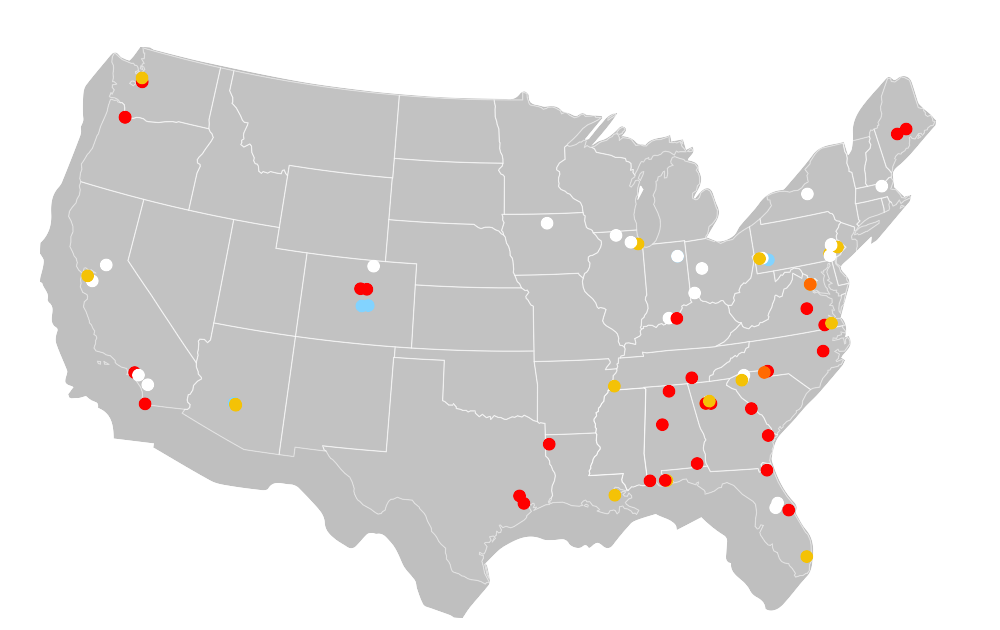
Founded in 1967, Applied Technical Services is a reputable and revered provider of testing, inspection, and certification (TIC) services. Over the decades, we’ve made major investments in our staff, facilities, and operations, and today, the ATS FoC operates across the continental US.
In 2026, the ATS FoC partnered with SGS, the global leading provider of TIC services. SGS expands our access to resources and technical expertise, furthering our ability to continue our history of service excellence.
Contact Us
Submit an online form or call +1 (888) 287-5227 to discuss your testing needs, request a quotation, or submit an inquiry. We can help develop a testing program tailored to your material, application, and project goals.