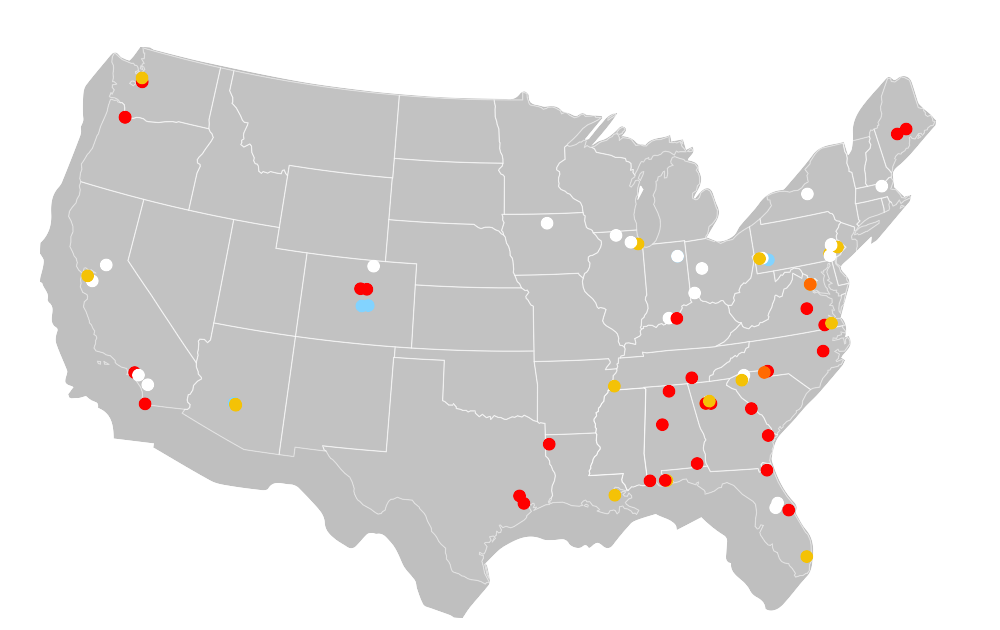
The Applied Technical Services Family of Companies (ATS FoC) provides wire bond shear testing for semiconductor manufacturers, electronics suppliers, and engineering teams, delivering documented results that support informed quality and process decisions.
Semiconductor assemblies depend on secure, consistent bonds. Even small bonding variations can affect production yields and device performance. Wire bond shear testing helps manufacturers assess these connections through controlled mechanical loading.
What Can Wire Bond Shear Testing Reveal About a Semiconductor Assembly?
Wire bond shear testing evaluates the mechanical strength of a bonded connection. It commonly applies to ball bonds formed on semiconductor dies, substrates, and other microelectronic surfaces. During the test, a shear tool moves laterally against the bond. The equipment applies force until the bond shears, separates, or reaches a defined endpoint. The recorded force provides quantitative data about bond performance.
Failure characteristics may offer additional context. Depending on the assembly, the test may show separation at the bond interface, failure within the bond material, or damage to the underlying surface. Our technicians document relevant observations within the agreed project scope. We report the findings without treating one result as proof of a broader manufacturing issue.
When Should a Manufacturer Request Bond Shear Testing?
Manufacturers may request testing while establishing a new bonding process. Comparing results from different settings can help teams evaluate process changes before full production begins. Testing can also support ongoing production monitoring. Results collected at planned intervals may help identify shifts in bonding consistency. Engineers can then determine whether further review is appropriate. Common testing applications include include:
- New product or package development
- Bonding equipment setup and qualification
- Process parameter comparisons
- Production lot evaluations
- Supplier or material changes
- Incoming component inspections
- Customer specification reviews
- Investigation of damaged or failed devices
Automotive, aerospace, defense, medical device, and telecommunications organizations may require this service. Research groups and contract manufacturers also use shear data when evaluating microelectronic assemblies. Each project begins with a review of its purpose. This step helps us align the test setup with the component and requested criteria.
How Does ATS Approach Wire Bond Shear Testing?
Effective shear testing requires careful control of the test conditions. Tool position, loading direction, and test speed can influence results. Component geometry and access can also affect the available approach. Our process generally includes four stages:
- Project review: We confirm the sample type, bond design, quantity, and test objective.
- Method selection: Our team reviews applicable specifications and determines suitable test parameters.
- Controlled testing: Technicians position the samples, apply the specified load, and monitor each test.
- Results reporting: We provide recorded force values, observations, and relevant testing details.
We use calibrated equipment appropriate for small-scale mechanical testing. Our technicians take care when handling sensitive components and preparing each test position. If a bond cannot be accessed as planned, we communicate the limitation. We may recommend an adjusted setup or a different evaluation method. Any change requires client agreement before the project proceeds.
How Can Shear Test Data Strengthen Quality and Engineering Decisions?
Shear test data can help engineering teams compare bonds under consistent conditions. This information may support process development, verification activities, or manufacturing reviews. For example, a client may compare bond strength before and after a material change. Another may evaluate multiple equipment settings during process development. Quality teams may use the results alongside visual inspection and production records. Our testing reports typically include:
- Individual shear-force measurements
- Test parameters and equipment information
- Sample identification
- Observed failure locations or characteristics
- Deviations or testing limitations
- Summary data requested within the scope
Acceptance depends on the client’s specification, applicable standard, and intended use. ATS does not assign pass-or-fail status unless the project includes defined criteria. We perform wire bond shear testing in our ISO/IEC 17025:2017-accredited, ISO 9001:2015-registered testing laboratories.
Contact Us
Our goal is to provide clear, traceable information that clients can use with confidence. Contact the wire bond shear testing experts at ATS to discuss your wire bond shear testing needs, sample configuration, or reporting requirements by submitting a request form on this page or calling +1 (888) 287-5227.