Applied Technical Services performs a variety of methods in its capacity as a state-of-the-art dynamic testing lab. Dynamics testing entails subjecting samples or specific equipment to forces to evaluate physical or electronic performance characteristics of interest.
Our clients request this type of analysis for a variety of reasons, including:
- Qualifying materials for a design
- Determining performance under extreme conditions
- Validating durability during pre-production
- Investigating the root cause of mechanical failure
Our Services
Our in-house mechanical and environmental testing labs perform a variety of dynamic methods to determine whether samples display a sturdiness in line with client expectations.
Mechanical Fatigue Testing
Fatigue testing involves repeatedly stressing a material sample (sometimes just tension, sometimes both tension and compression) until either a predetermined number of cycles is reached or the sample fails.
- High- and Low-Cycle
- Wide Temperature Range (Ambient – 1,000°C)
- Vast Load Range (2 lbs – 55 kip)
- Strain Gauging
- Fracture Toughness
- Crack Tip Opening Displacement (CTOD)
- ASTM E466, ASTM E399*, ASTM E1290*, ASTM E606, and ASTM E1820*
Vibration Testing
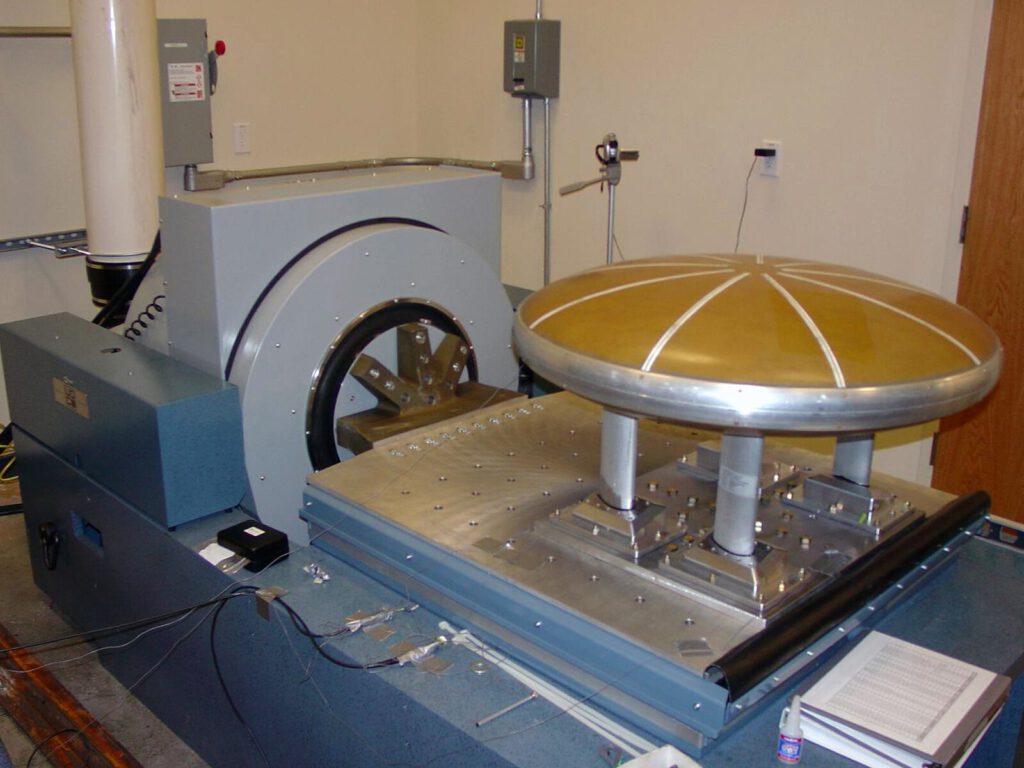
Vibration testing uses a specialized table to expose a sample to a series of vibrations. These vibrations may follow an exacting regimen to determine the sample’s overall durability, or simulate those it could experience in transit, during installation, or in its intended service environment.
Our Testing Equipment
- Electrodynamic Shakers with AGREE Chambers for Temperature / Humidity Control
- Frequencies from 5Hz – 2,000 Hz
- High Force Capabilities (6,000 lbf – 12,000 lbf)
- Sine, Random, Sine on Random, Classic Shock, Resonance Search and Dwell, and Shock Response Spectrum (SRS)
Vibration Testing Standards
- MIL-STD 810H Method 514.6*
- RTCA DO-160 Method 8*
- IEC 60068-2-27*, IEC 60068-2-6, and IEC 60068-2-64*
Seismic Testing
Seismic testing bears many similarities to vibration testing, but instead of a shaker, it uses a hydraulic table that applies smaller forces with greater displacements at lower frequencies across three or more axes (controlling for pitch, roll, and yaw). Seismic testing is frequently used on final assemblies, as specifications may require the sample to successfully operate before, during, and after the shake.
Our Seismic Equipment
- Triaxial Shaker with 36” × 36” Table
- 12” Peak Displacement (+/-6”)
- Velocity of 52IPS
- Broad Frequency Range (0.5 Hz – 150 Hz)
Seismic Testing Standards
- IBC-Compliant
- ICC-ES AC-156*
- IEEE 344*
- GR-63-CORE*
Mechanical Shock Testing
Mechanical Shock requires applying a large mechanical jolt by accelerating the sample along a single axis (typically either with or against gravity). We perform this test to see how the shock propagates through the material, whether any components loosen from the assembly, or other indications of nonconformance with design specifications.
Test Methods
- Functional, Crash Hazard, and Material-to-be-Packaged Shock Testing
- Reveals Friction Between Parts, Structural Failures, Variations in Electrostatic Field, and More
Shock Testing Standards
- MIL-STD 810H Method 516.6*
- RTCA DO 160 Section 7*
- IEC 60068-2-27*, IEC 60068-29, and IEC 60068-31*
- SAE J1455
- MIL-STD 202G Method 205, Method 213
Impact Testing
Impact testing is a subcategory of mechanical shock in which the sample material is subjected to a sudden strike by an implement to assess its resistance to impact. It is typically used to validate materials or welds for end products intended to withstand adverse environments and stressful service conditions.
Impact Test Methods
- Charpy, Izod, and Drop Weight Methods
- Find Impact Toughness, Ductile-to-Brittle Transition Temperature (DBTT), and Nil-Ductility Transition Temperature (NDT)
Impact Testing Standards
- ASTM E23*, ASTM A370*
- EN 10045-1*, EN ISO 9016*
- ISO 148-1*, ISO 180
- ASTM D256*, ASTM E208
Drop Testing
Drop testing is a subcategory of mechanical shock testing in which technicians load the sample onto a machine that holds it at a certain height and orientation before dropping it either onto a raised hazard or directly onto the floor.
Drop Testing Methods
- Free-Fall and Tumble Drop Methods
- Determine Fragility and Validate Assemblies
Drop Testing Standards
- MIL-STD 810G Method 516.6*
- ASTM D4169, ASTM D5276, and ASTM D7386
- ISO 2248
*indicates ISO/IEC 17025:2017 (A2LA) accredited test
Testing for Durability
Although these testing methods may seem to vary greatly, they share the common trait of applying physical stimuli suddenly and/or repeatedly. Doing so gives technicians a better indication of how the sample would hold up when the final product is faced with an uncontrolled force in a service setting.
Establishing whether the sample lives up to the degree of durability required in the product or component’s design specifications allows manufacturers to make any necessary changes earlier in the production process, ultimately saving them money
About Applied Technical Services
Applied Technical Services offers all the testing outlined above and so much more. We are a multidisciplinary firm aiding companies in their varied testing, inspection, and consulting engineering needs.
Our team of over 1,000 technicians, inspectors, investigators, trainers, calibrators, Professional Engineers, scientists, and chemists supports clients operating in countries worldwide.
Of the great many we serve in other capacities, the industries that most benefit from ATS’ capabilities as a dynamics testing lab include the following:
- Manufacturing
- Oil and Gas
- Automotive
- Nuclear
- Defense / Military
- Aerospace
- Communications
- Medical
- Consumer Products
Contact Us
If your company needs the services of a tried-and-true dynamics testing lab, contact ATS today. Call +1 (888) 287-5227 or click here to contact us.